250 Years of Liberty – Part III: Freedom Requires Virtue
As America celebrates the 250th anniversary of its independence, Part III of 250 Years of Liberty explores the timeless truth that freedom requires virtue. Discover why the Founding Fathers believed the Constitution alone could not preserve liberty, and how civic virtue, personal responsibility, strong families, and engaged communities remain essential to sustaining the American experiment and the constitutional republic nearly 250 years later.

The Founding Fathers believed in something increasingly difficult to say in the modern world. A free society depends upon self-governing people.
Not simply people who vote. Not merely people who obey the law. But citizens who are capable of governing themselves.
They understood that constitutions, courts, and elections could accomplish only so much.
No document, however brilliantly written, can preserve liberty if the people themselves lose the character necessary to sustain it.
This may be the most overlooked lesson of America’s founding.
The Constitution restrains government. Virtue restrains ourselves. Both are NECESSARY.

Liberty Begins with Self-Government
When we hear the phrase self-government, we usually think of elections.
The Founders meant something much deeper.
Before a people can govern a nation, they must first govern themselves. A citizen who lacks honesty, integrity, discipline, or personal responsibility cannot simply vote those qualities into existence through government.
Freedom requires citizens who exercise restraint even when no law compels them. That is why America’s founders spent so much time discussing education, morality, civic responsibility, and public virtue.
John Adams wrote:
“Our Constitution was made only for a moral and religious people. It is wholly inadequate to the government of any other.”
His point is often misunderstood. He was not suggesting that the government should impose religion. He was recognizing that liberty depends upon an internal moral compass.
The less people govern themselves, the more the government is tempted to govern them. That observation remains remarkably relevant nearly 250 years later.
Rights and Responsibilities
The Declaration of Independence speaks eloquently about rights. Modern Americans are rightly passionate about defending them.
Freedom of speech. Freedom of religion. The right to keep and bear arms. Due process. Equal protection under the law.
These rights deserve vigorous defense.
Yet the Founders rarely discussed rights without also discussing responsibility.
The freedom to speak carries the responsibility to pursue truth. The freedom to vote carries the responsibility to become informed. The freedom to assemble carries the responsibility to respect the rights of others.
Liberty has never meant doing whatever we wish without consequence. Liberty means possessing the freedom to choose and accepting responsibility for those choices.
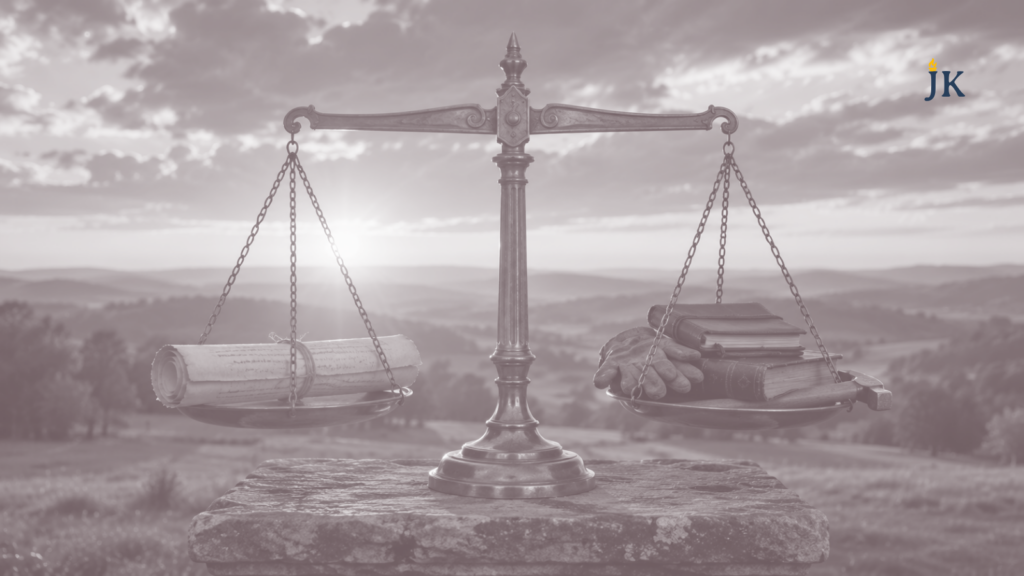
Perhaps that is what makes freedom so demanding.
Government can compel obedience, but only character produces responsibility.
The Institutions That Shape Free People
Alexis de Tocqueville traveled throughout America in the 1830s searching for the source of its remarkable success. He expected to find the answer in Washington. Instead, he found it in ordinary communities.
He observed churches. Schools. Volunteer organizations. Local governments. Neighbors helping neighbors. Citizens solving problems without waiting for distant authorities.
He concluded that America’s strength did not originate primarily from its government. It grew from the habits of its people.
Families taught responsibility. Communities cultivated trust. Local institutions encouraged participation. Citizens learned cooperation long before they entered politics.
That observation STILL deserves our attention.
Healthy republics are not built only in capitol buildings. They are built around dinner tables. In classrooms. In places of worship. On Little League fields. At civic clubs. In neighborhoods where people know one another.
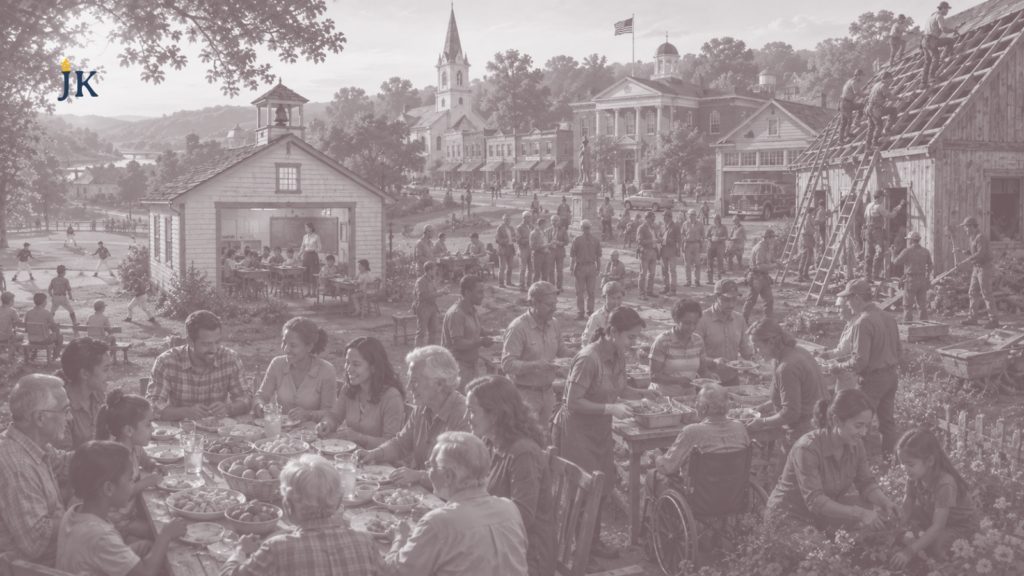
These are the places where future citizens learn what freedom REQUIRES.
Citizenship Is More Than Politics
Too often, we reduce citizenship to elections.
Voting matters, but citizenship does not begin every two or four years. It begins every day.
A citizen serves on a school board. Volunteers at a food pantry. Coaches a youth team. Starts a small business. Mentors a young person. Serves in uniform. Pays taxes honestly. Shows kindness to a stranger. Keeps a promise.
These actions rarely make headlines, yet they quietly strengthen the fabric of a free society.
The American experiment has always depended more upon millions of ordinary citizens fulfilling ordinary responsibilities than upon a handful of extraordinary leaders.
History remembers presidents. Republics endure because of neighbors.
Optimism Is a Civic Duty
It has become fashionable to believe that America is irreparably broken.
Certainly, we face serious challenges.
Political polarization. Declining trust. Economic uncertainty. Rapid technological change. The temptation is to conclude that our best days are behind us.
The Founders would likely reject such pessimism. Not because they believed America would avoid hardship, but because they believed free people possessed the capacity to confront it.
Optimism is not naïve. It is a recognition that the American experiment has overcome extraordinary obstacles before.
Generation after generation has inherited problems it did not create. Generation after generation has chosen to solve them.
That confidence in the character of ordinary citizens remains one of America’s greatest strengths.
250 Years Later
As America approaches its 250th anniversary, we rightly celebrate remarkable documents.
The Declaration of Independence. The Constitution. The Bill of Rights.
Yet paper alone has never preserved liberty. People HAVE.
For nearly two and a half centuries, farmers, teachers, entrepreneurs, parents, soldiers, first responders, pastors, scientists, laborers, public servants, and countless ordinary Americans have quietly carried the responsibilities of citizenship.
Few of their names appear in history books.
Yet together they have sustained one of history’s longest-running constitutional republics.
The American experiment has always rested upon an extraordinary belief: That ordinary people, when entrusted with freedom and guided by virtue, are CAPABLE of governing themselves.

That belief remains worth defending. Not only through our votes, but through the way we live.
Every generation writes another chapter in the American story.
May ours be remembered not simply for preserving freedom, but for proving ourselves worthy of it.
“Of all the dispositions and habits which lead to political prosperity, religion and morality are indispensable supports.” — George Washington, Farewell Address
Other Parts in the ‘250 Years of Liberty’ Series:
- Part I: The Idea That Changed the World
- Part II: Why the Founders Distrusted Power
- Part IV: Why the American Experiment Still Works
- Part V: The Next 250 Years

Jeramy Kitchen
Holding the line in Austin. Analysis of public policy making its way through the process, campaign finance, and the occasional field note from a concerned taxpayer.