250 Years of Liberty – Part II: Why the Founders Distrusted Power
As America approaches the 250th anniversary of its independence, Part II of 250 Years of Liberty explores why the Founding Fathers intentionally limited government power through the United States Constitution. Discover how separation of powers, checks and balances, federalism, and the rule of law were designed to protect individual liberty—and why these constitutional principles remain essential to preserving the American republic nearly 250 years later.
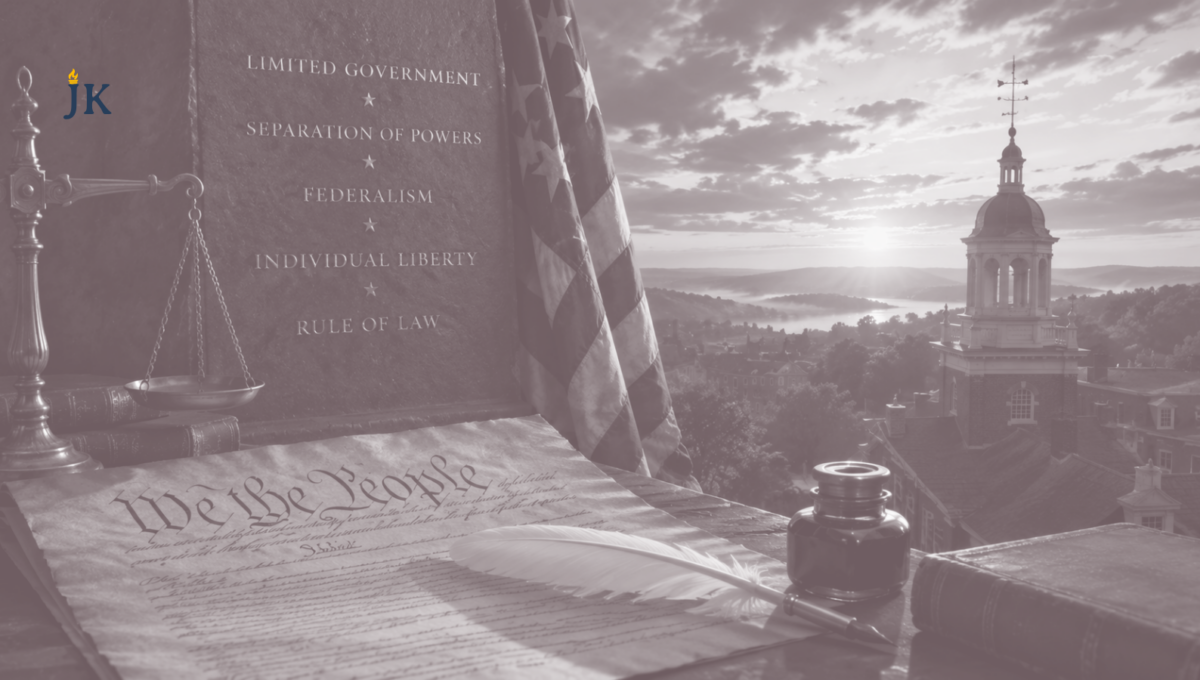
There is perhaps no greater misunderstanding about America’s founding than this: Many assume the Founders created a strong government because they trusted those who would one day hold power. The truth is almost exactly the opposite.
They designed our system because they did NOT. History had taught them a painful lesson.
Power, no matter how well-intentioned at the beginning, has a tendency to grow. Governments rarely surrender authority voluntarily. Leaders often convince themselves that extraordinary circumstances justify extraordinary powers. What begins as a temporary solution can become a permanent expansion of government.
The Founders understood this because they had lived it. Their grievances against King George III were not simply complaints about one man; they were objections to concentrated power itself.
The American Revolution was not merely a rejection of monarchy. It was a rejection of the idea that any government should possess unchecked authority.
That conviction shaped EVERYTHING that followed.
Building a Government for Imperfect People
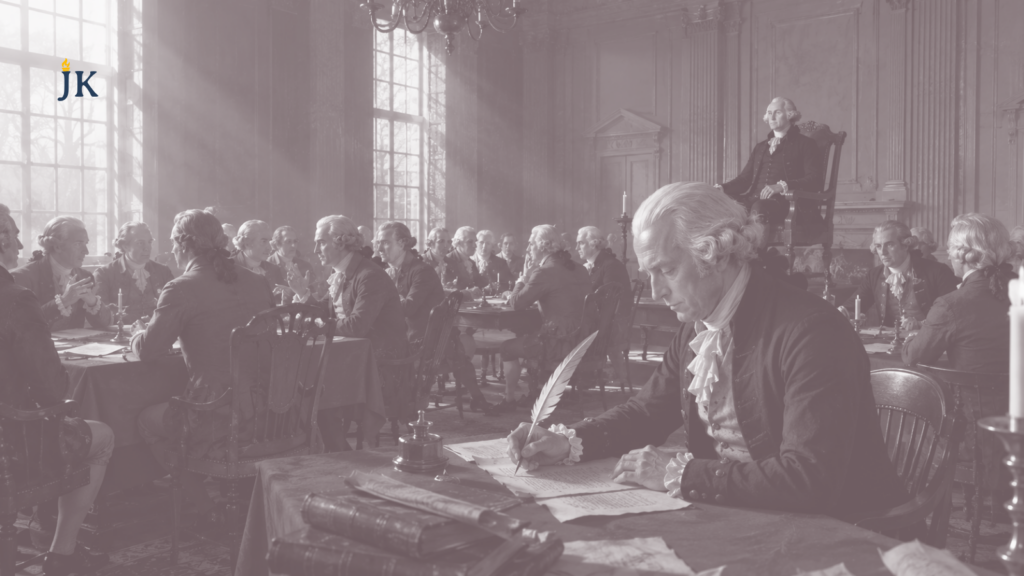
When delegates gathered in Philadelphia in the summer of 1787, they faced an enormous challenge.
The Articles of Confederation had proven too weak to effectively govern a growing nation, yet creating a stronger national government carried its own dangers.
How could they build a government capable of protecting liberty without becoming a threat to liberty itself?
They did not believe they could solve that problem by electing perfect leaders. Instead, they assumed no such leaders existed.
James Madison expressed this reality with remarkable clarity in Federalist No. 51:
“If men were angels, no government would be necessary.”
He continued with an equally important observation:
“If angels were to govern men, neither external nor internal controls on government would be necessary.”
Those two sentences reveal perhaps the most important assumption underlying the Constitution. Human nature does not fundamentally change when someone wins an election or receives a government appointment.
The Constitution was never intended to make government perfect. It was designed to make the abuse of power more difficult.
Ambition Against Ambition
The Constitution contains no single office that controls every aspect of government. Instead, power is intentionally divided.
Congress writes laws. The President executes them. The judiciary interprets them.
Each branch possesses tools to check the others.
The Founders understood that institutions, like individuals, pursue their own interests. Rather than hoping government officials would always exercise restraint, they structured government so that competing ambitions would restrain one another.

Madison famously described this arrangement as giving:
“To those who administer each department the necessary constitutional means and personal motives to resist encroachments of the others.”
In other words, freedom would be preserved not because government officials were uniquely virtuous, but because no single branch could easily dominate the others.
It was an elegant solution rooted in a realistic understanding of human nature.
Liberty Begins by Limiting Government
One of the most remarkable aspects of the Constitution is NOT what it authorizes. It is what it withholds.
Unlike many governments throughout history, the federal government was not granted unlimited authority. Its powers were specifically enumerated. Everything not delegated remained with the states or the people.
This reflected a profound belief.
Government is not the source of liberty. Government is the guardian of liberty.
There is an IMPORTANT difference.
If the government creates rights, the government can redefine them. If rights exist independently of government, then government exists under moral limits.
That principle explains why the Bill of Rights does NOT grant freedoms. It recognizes freedoms that already belong to the people.
The First Amendment does not create free speech. It prohibits Congress from infringing upon it.
The Second Amendment does not invent the right to keep and bear arms. It protects that right from federal interference.
The Fourth Amendment does not establish privacy. It recognizes limits on government searches and seizures.
Again and again, the Constitution places boundaries around government rather than expanding its reach.
That is not an accident. It is the document’s defining characteristic.
Federalism: Liberty Through Diversity
The Founders also recognized another danger. Power becomes more dangerous the farther it is removed from the people. Instead of concentrating authority in one distant capital, they divided power between the national government and the states.
This principle, known as federalism, allowed communities to govern many of their own affairs while remaining united as one nation.
It also created something extraordinary. Fifty laboratories of democracy. Different states could pursue different policies. Citizens could compare results. Successes could be replicated. Failures could remain contained.

Rather than assuming every problem required one national solution, the Founders believed liberty was strengthened when decisions were made as close to the people as possible.
Even today, federalism remains one of America’s greatest constitutional innovations.
The Constitution Was Never Meant to End Debate
Some imagine the Constitution as a document that settled every question. It did NOT.
The Founders knew future generations would confront challenges they could never imagine.
Steam engines would give way to railroads. Railroads to automobiles. Automobiles to airplanes. Telegraphs to telephones. Computers to artificial intelligence.
The Constitution was designed to endure because its principles are permanent, even as circumstances change.
The Framers expected Americans to debate. To disagree. To persuade. To amend.
What they sought to prevent was not disagreement; it was the concentration of unchecked power.
Liberty does not require unanimous agreement. It requires institutions capable of managing disagreement peacefully.
That remains one of America’s greatest achievements.
250 Years Later
As we approach the 250th anniversary of American independence, it is tempting to judge the Constitution solely by today’s political frustrations.
Congress disappoints us. Presidents frustrate us. Courts issue controversial decisions. States pursue different policies. The process often feels slow. Messy. Even inefficient. But perhaps that is the point.
The Constitution was never intended to maximize efficiency. It was intended to preserve liberty.
Freedom often requires patience. Checks and balances inevitably slow government. Federalism produces disagreement. The separation of powers creates friction.
These are not design flaws. They are constitutional safeguards.
For nearly 250 years, they have helped preserve a republic unlike any the world had ever seen.
The Constitution does not assume those in power will always make wise decisions. Instead, it assumes something far more enduring:
That liberty is best protected when no one possesses too much power.
That lesson remains as relevant today as it was in Philadelphia nearly two and a half centuries ago.
Our Constitution has endured because it understands something timeless about human nature.

The men who wrote it were not naïve. They were realists.
And perhaps that realism has become one of America’s greatest strengths.
“The accumulation of all powers, legislative, executive, and judiciary, in the same hands… may justly be pronounced the very definition of tyranny.” — James Madison, Federalist No. 47
Other Parts in the ‘250 Years of Liberty’ Series:
- Part One: The Idea That Changed the World
- Part Three: Freedom Requires Virtue
- Part Four: Why the American Experiment Still Works
- Part Five: The Next 250 Years

Jeramy Kitchen
Holding the line in Austin. Analysis of public policy making its way through the process, campaign finance, and the occasional field note from a concerned taxpayer.