Ordinary Men, Extraordinary Courage: Reflecting on D-Day
On June 6, 1944, ordinary men did extraordinary things in defense of freedom. This D-Day reflection honors the courage, sacrifice, and legacy of the Allied soldiers who stormed the beaches of Normandy, changed the tide of World War II, and helped preserve Western civilization for future generations.
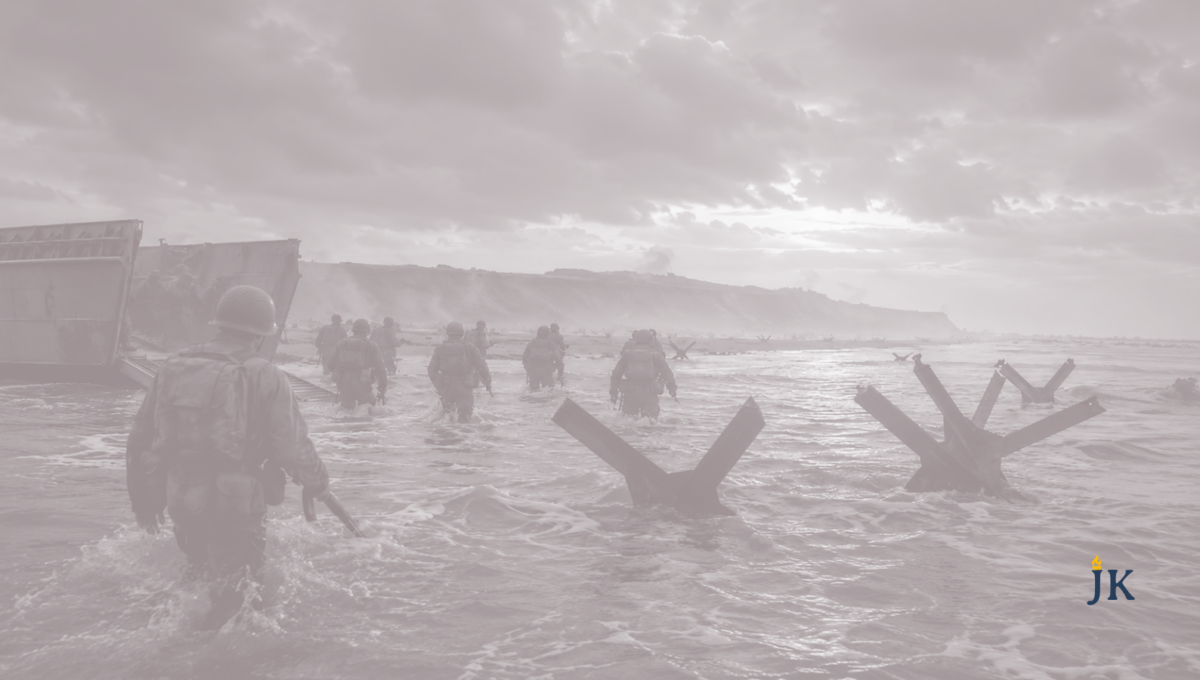
On June 6, 1944, the fate of Western civilization turned on the courage of ordinary men.
They were young soldiers, sailors, airmen, medics, engineers, paratroopers, and infantrymen. Many were barely old enough to have lived much life at all. They came from farms, factory towns, neighborhoods, small communities, and families who had already sacrificed much during years of global war. They were not mythological figures. They were not born into legend. They were sons, brothers, husbands, fathers, and friends.
Yet on the beaches of Normandy, ordinary men did extraordinary things in defense of freedom.
D-Day was more than a military operation. It was a civilizational moment. The Allied invasion of Nazi-occupied France represented the beginning of the liberation of Western Europe and a direct assault on one of the most evil regimes the world has ever known. The men who crossed the English Channel that morning were not merely fighting for territory. They were fighting to restore nations, liberate oppressed people, and push back against tyranny.
For the generation that fought World War II, D-Day was one of the defining tests of their time. It demanded a level of sacrifice difficult for later generations to fully comprehend. These men had grown up during the Great Depression, watched the world descend into war, and then found themselves asked to carry the burden of history on their shoulders. They did not have the luxury of believing that freedom would preserve itself. They understood, perhaps more clearly than many of us do today, that civilization can collapse when good men fail to confront evil.
The beaches of Normandy: Omaha, Utah, Gold, Juno, and Sword, became names etched into history. At Omaha Beach especially, American forces faced devastating resistance. Men jumped from landing craft into chaos. Some drowned under the weight of their gear. Some were cut down before they could reach the sand. Others pressed forward under fire, climbing bluffs, destroying obstacles, clearing paths, and refusing to let the invasion fail.
It is difficult to imagine the terror of that morning. The sound of artillery. The confusion of smoke and water. The cries of the wounded. The knowledge that every step forward might be the last. And yet they moved forward.
That is what courage often looks like. Not the absence of fear, but the decision to act despite it.
D-Day changed the tide of the war. The Allied landings established the foothold needed to begin the liberation of France and open a western front against Nazi Germany. From Normandy, Allied forces would push across Europe, liberating towns and cities that had lived under occupation for years. Less than a year later, Nazi Germany would be defeated.
But the significance of D-Day reaches beyond military strategy. It was a reminder that Western civilization, with all its flaws and imperfections, was worth defending. The ideals of ordered liberty, self-government, human dignity, religious freedom, private life, and national sovereignty stood in direct opposition to the totalitarian darkness that had consumed much of Europe.
The men who landed in Normandy did not fight because their world was perfect. They fought because the alternative was evil. They fought because some lines must be held. They fought because there are moments in history when retreat is not an option.
Over the decades, D-Day has been remembered through books, documentaries, monuments, speeches, and dramatizations. Films like The Longest Day sought to capture the massive scale of the invasion. Saving Private Ryan forced modern audiences to confront, in a visceral way, the horror and sacrifice of the landings. The series Band of Brothers gave us a more intimate look at the men who trained together, jumped into Normandy, fought across Europe, and carried the weight of war long after the shooting stopped.
These dramatizations matter because memory matters. They are not substitutes for history, but they help later generations feel the weight of events that can otherwise become distant dates in a textbook. They remind us that D-Day was not inevitable. Victory was not guaranteed. The men involved did not know how history would remember them. They only knew the mission in front of them.
Behind every dramatization are real stories. Stories of paratroopers scattered across the French countryside in the dark. Stories of Rangers scaling the cliffs at Pointe du Hoc. Stories of medics treating the wounded while exposed to enemy fire. Stories of landing craft crews returning again and again through danger to bring more men to shore. Stories of soldiers who watched friends die and kept moving because the mission required it.
There are also stories of quiet sacrifice that rarely make it into movies. The families waiting at home. The parents who received telegrams. The wives who never saw their husbands again. The children who grew up with photographs instead of memories. The veterans who came home, built lives, raised families, and often spoke little of what they had seen.
That generation carried the scars of war with a kind of quiet dignity. Many did not view themselves as heroes. They believed they had done what duty required. Perhaps that humility is part of why their example still resonates. They did not seek greatness, but greatness found them in the crucible of history.
Today, as we reflect on D-Day, we should resist the temptation to reduce it to a slogan or a sentimental anniversary. It deserves more than that. It deserves sober reflection.
It should remind us that freedom has a cost. It should remind us that peace is not maintained by wishful thinking. It should remind us that evil is real, that civilization is fragile, and that the blessings we inherit were often purchased by the courage of those who came before us.
D-Day also challenges us to ask what kind of people we are becoming. The men who stormed Normandy were not perfect men, but they were formed by a culture that still understood duty, sacrifice, faith, family, country, and moral clarity. They knew that some causes were larger than the individual. They understood that liberty required responsibility. They believed that defending civilization sometimes required personal sacrifice on a scale almost impossible to imagine.
That is a lesson worth recovering.
On June 6, 1944, ordinary men crossed a dangerous sea and stepped into history. They did not know if they would survive the day. Many did not. But because they went forward, millions would eventually be liberated. Because they went forward, the Nazi war machine was pushed back. Because they went forward, the world was changed.
Today, we remember them.
We remember the men who never made it off the beaches. We remember those who survived and carried the burden for the rest of their lives. We remember the families who sacrificed alongside them. We remember the generation that faced tyranny and refused to surrender the future to it.
Ordinary men did extraordinary things in defense of freedom.
May we reflect on their courage. May we honor their sacrifice. And may we never forget what was won, what was lost, and what must always be defended.

Jeramy Kitchen
Holding the line in Austin. Analysis of public policy making its way through the process, campaign finance, and the occasional field note from a concerned taxpayer.