First Principles: Part I – What Do Conservatives Even Stand For?
What do conservatives truly stand for? Explore the founding principles of American conservatism, constitutional government, liberty, and why first principles matter more than the political issue of the day.
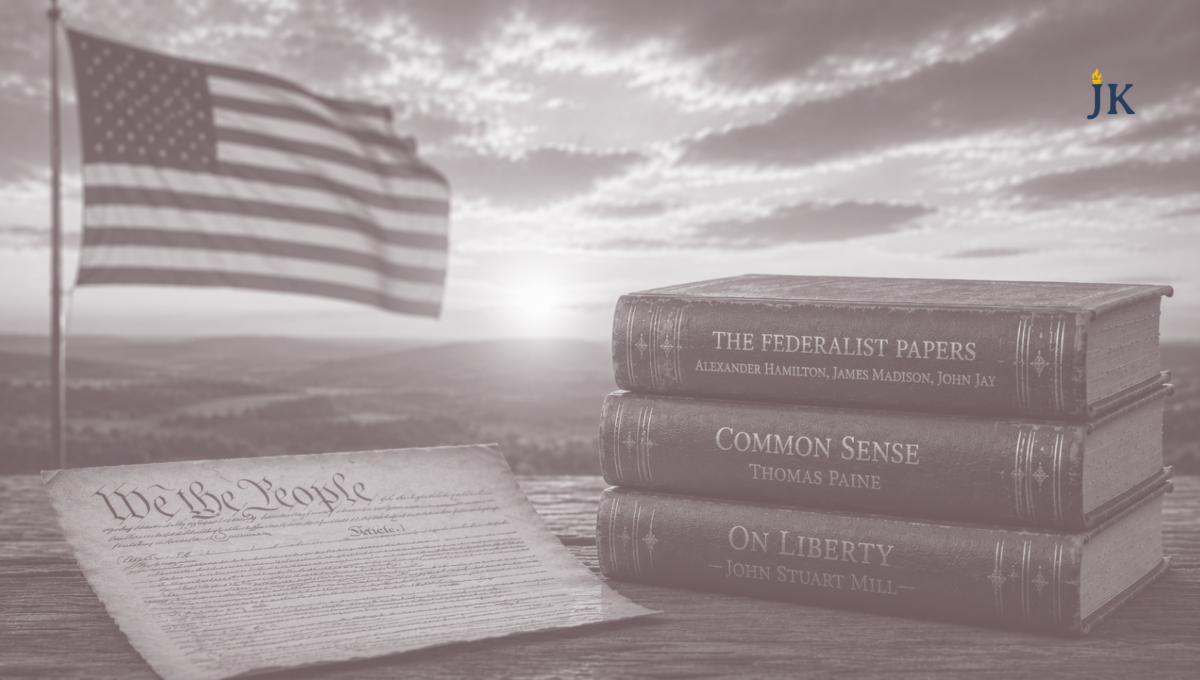
For much of my adult life, I never would have imagined asking this question, yet over the past several years, I’ve found myself asking it more and more often.
Not because I think conservatism has failed, but because I think those who purport to be ‘conservative’ have become increasingly good at telling people what they are AGAINST while becoming less effective at explaining what they are FOR.
Ask ten self-proclaimed conservatives today what defines conservatism, and you’ll probably hear ten different answers.
Election integrity. Border security. Ending DEI. School choice. Property taxes. The Second Amendment. The latest controversy on social media.
None of those answers are necessarily wrong, but they’re also INCOMPLETE.
Those are issues. They are NOT principles. Issues change. Principles endure.
Conservatism Is Not a Collection of Policy Positions
Imagine waking up tomorrow and discovering that every issue currently dominating the news had been resolved.
What would conservatives still believe?
If the answer is “I’m not sure,” then we’ve confused our policy priorities with our governing philosophy.
Conservatism isn’t simply opposition to the political left. Nor is it unquestioning support for whoever currently leads the Republican Party. At its best, conservatism is a coherent philosophy about human nature, liberty, and the proper role of government.
First Principles Matter
For me, conservatism begins with several enduring ideas.
Government exists to secure rights, not grant them. Liberty should be the default, not the exception. Power should remain as close to the people as possible. Private property is essential to freedom. Families, churches, and local communities should solve problems before the government attempts to. The Constitution is not an obstacle to overcome but a framework designed to preserve liberty.
These principles don’t tell us the answer to every policy question, but they give us a FRAMEWORK for evaluating those questions.
Without them, every debate becomes subjective.
The Attention Economy Is Replacing Philosophy
Social media has fundamentally changed political activism. Every day brings a new outrage. A new villain. A new crisis. A new “most important issue.”
The result is a ‘movement’, or lack thereof, that often reacts faster than it reflects.
Many activists don’t evaluate issues through a set of principles. Instead, they evaluate issues based on what is currently commanding attention.
That’s NOT strategy. That’s algorithmic politics.
Principles Help Us Prioritize
Not every issue deserves equal attention. Not every disagreement is existential. Not every piece of legislation is the most important legislation of the session.
First principles provide a filter. They help us determine:
- Does this expand liberty?
- Does this increase government power?
- Is this constitutional?
- Does it strengthen families and civil society?
- Is the government the proper institution to solve this problem?
Without those questions, every issue becomes DEFCON 1.
A Movement Must Stand For Something
One of my greatest concerns is that whatever the ‘conservative movement’ is these days has increasingly become DEFINED by opposition.
Against this. Against that. Against whoever the villain of the week happens to be. Opposition can win elections. It CANNOT sustain a governing movement.
If conservatism is going to endure, it must once again become a philosophy before it becomes a political strategy.
That requires educating citizens, not merely mobilizing activists. It requires building institutions, not just personalities. It requires thinking in decades, not news cycles.
The Better Question
Perhaps the question isn’t:
What issue should conservatives fight next?
Perhaps it’s this:
What principles should guide conservatives no matter what issue comes next?
Because issues will always change. Principles SHOULDN’T.

Jeramy Kitchen
Holding the line in Austin. Analysis of public policy making its way through the process, campaign finance, and the occasional field note from a concerned taxpayer.