The “Lesser of Two Evils” Is Still Evil
Voting for the “lesser of two evils” may feel pragmatic, but repeated compromise can erode principles over time and weaken political accountability.
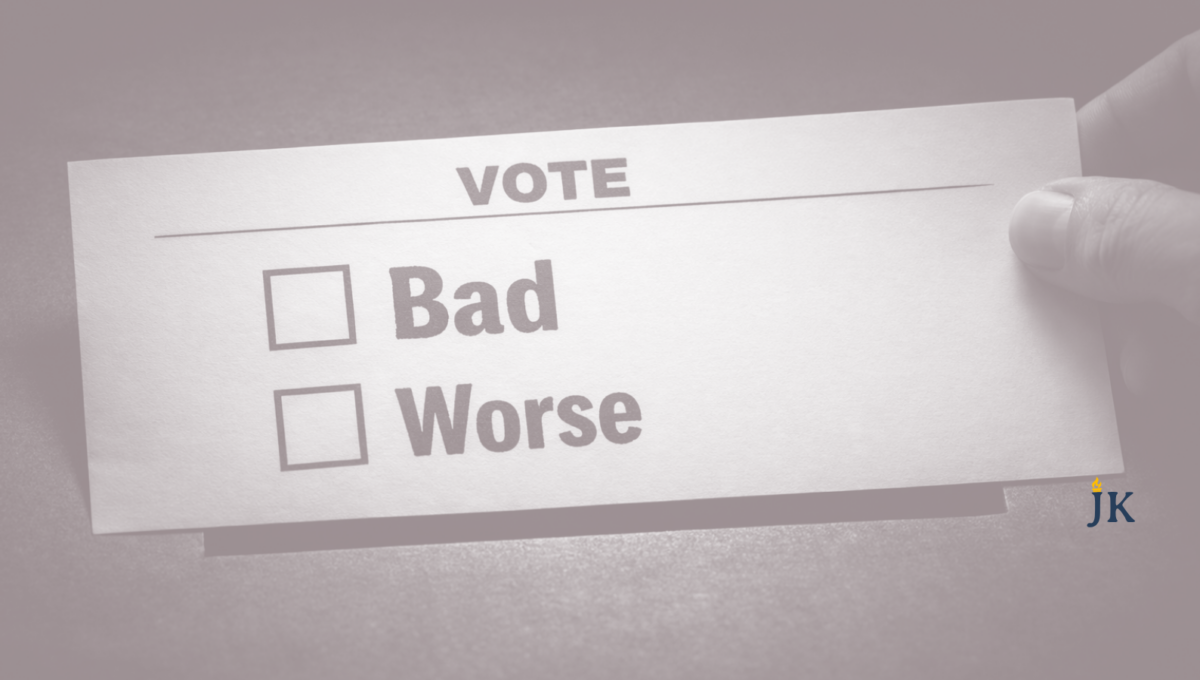
Every election cycle, we hear the same refrain: “You may not like them, but they’re the lesser of two evils.”
Cycle after cycle. Race after race. Year after year.
At some point, we should probably stop and ask a basic question: If we knowingly keep voting for evil, even in smaller doses, what exactly are we building?
The Trap We Keep Walking Into
The “lesser of two evils” argument feels pragmatic. It sounds mature. Responsible. Strategic.
We’re told that this is just how politics works. That compromise is inevitable. That purity is childish. That idealism is dangerous. But there’s a difference between compromise and surrender. When voters repeatedly accept candidates who violate their core principles, because the alternative is worse, we send a very clear message: “You can drift. You can disappoint. You can betray promises. We’ll still show up.”
And they believe us. Why wouldn’t they?
From Strategy to Stockholm Syndrome
Over time, something subtle happens. We stop evaluating candidates based on whether they reflect our values. Instead, we evaluate them by whether they’re slightly better than the other option. That’s not leadership. That’s hostage negotiation.
We begin defending behavior we once would have condemned, because “at least they’re not the other guy.” We rationalize spending that we used to oppose. We excuse policies we once warned about. We tolerate character flaws we once said were disqualifying.
Not because we changed our standards. Because we were told we had no choice.
That’s not a strategy. That’s political Stockholm syndrome.
No One Is Perfect. That’s Not the Point.
Let’s be clear: no candidate is perfect. No elected official will align with us 100 percent of the time. That’s not the expectation. The question isn’t perfection. The question is the trajectory.
Are they moving in the direction of your principles, or away from them? Are they restraining power, or expanding it? Are they defending liberty, or slowly redefining it?
If both options consistently undermine what you believe in, simply picking the slower erosion isn’t a long-term solution. It’s a slower decline.
The Point of Voting
If the only goal of voting is to prevent something worse, then politics becomes purely defensive. But voting was never meant to be an exercise in fear management. It was meant to be an act of consent.
When we vote, we’re saying: “Yes. I authorize this.”
If we can’t say that without gritting our teeth every time, something is broken, and it may not just be the candidates. It may be the expectations we’ve allowed to shrink.
What Happens If We Say “Enough”?
What if voters started rewarding courage instead of punishing it? What if we stopped automatically falling in line? What if candidates knew that drifting from principle had real consequences in primaries, not just in general elections?
The political class adapts to incentives. If the incentive is, “Just be slightly better than the other side,” that’s the standard we’ll get. If the incentive becomes, “Actually represent your constituents and their principles,” the quality of leadership changes. Not overnight. But gradually.
Ending the Cycle
The “lesser of two evils” mindset assumes there are only two choices. But voters are not powerless. We shape primaries. We shape narratives. We shape who survives politically and who doesn’t. At some point, we have to stop treating decline as inevitable.
No, no one is perfect, but the bar cannot be “slightly less bad.”
If we keep voting the same way, cycle after cycle, despite repeated disappointment, we shouldn’t be surprised when nothing changes. The point of voting isn’t to slow the loss of your principles. It’s to defend them.
And that requires more than picking the lesser evil. It requires saying, at some point: Enough.

Jeramy Kitchen
Holding the line in Austin. Analysis of public policy making its way through the process, campaign finance, and the occasional field note from a concerned taxpayer.