The Fourth Amendment Is Not a Technicality. It Is a Wall Between Free People and Government Power.
The Fourth Amendment exists to protect citizens from unchecked government intrusion. Privacy rights and constitutional protections remain essential in the digital age.
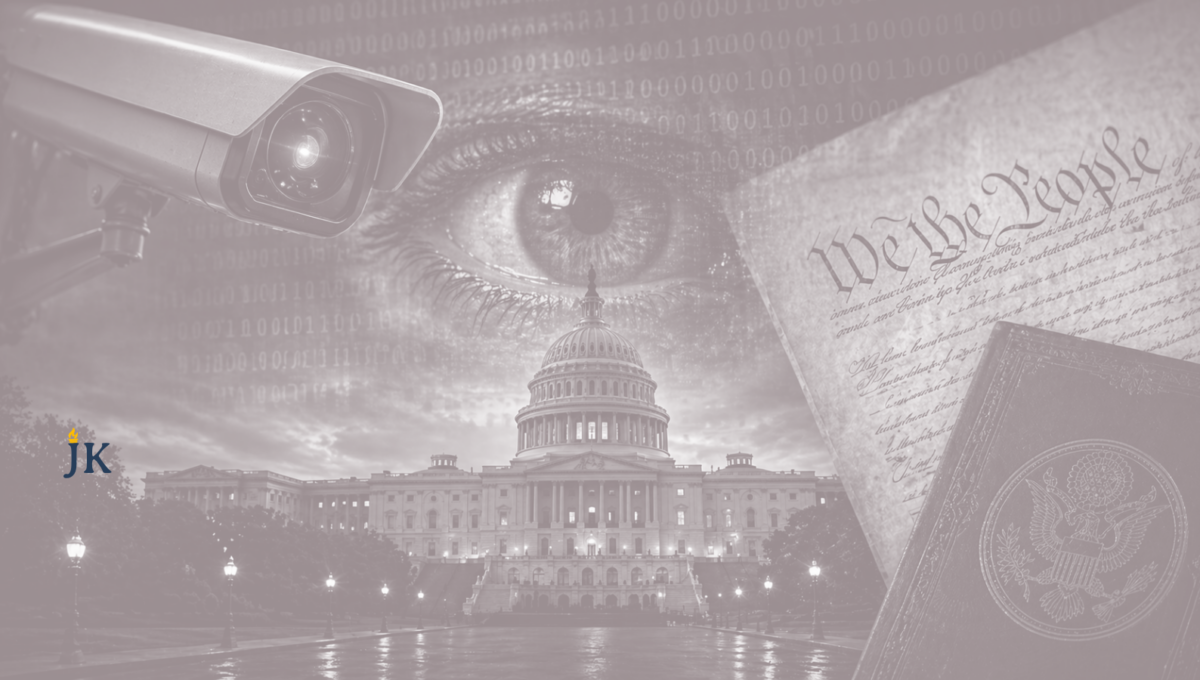
The Fourth Amendment is one of the clearest statements in the Bill of Rights: the government does not get to invade your life, search your property, or access your private communications simply because it wants to. It NEEDS a warrant.
Not a suspicion. Not a policy memo. Not a secret court interpretation. A warrant.
That requirement is not a procedural hurdle. It is the dividing line between a free society and one where the government operates on permission instead of restraint. It forces the state to justify its intrusion before it acts, not after the fact.
How My Thinking Changed
For a long time, I bought into the idea that expanded surveillance powers were necessary—and even patriotic.
Before my political awakening in the late 2000s, I thought the Patriot Act was exactly what it claimed to be. I believed it was designed to protect Americans from real threats, and I assumed those powers would be used responsibly. As someone who served as a military intelligence analyst, I understood the importance of intelligence gathering and national security.
I also believed the phrase we have all heard before: if you have nothing to hide, you have nothing to fear.
But over time, I came to realize that this way of thinking flips the Constitution on its head. The issue is not whether intelligence matters. It does. The issue is whether the government should be trusted with broad, secretive authorities that allow it to bypass the very protections designed to keep it in check.
My answer today is simple: NO.
What FISA Actually Is
To understand the current debate, you have to understand what FISA is.
The Foreign Intelligence Surveillance Act (FISA), passed in 1978, was originally intended to create a legal framework for surveillance related to foreign intelligence. It established the Foreign Intelligence Surveillance Court, a secret court where the government can apply for surveillance warrants in national security cases.
At least in theory, FISA was supposed to preserve the warrant requirement while allowing the government to operate in sensitive intelligence environments. But like many government authorities, it did not stay narrowly tailored.
What Section 702 Does
Section 702 of FISA, added in 2008, significantly expanded surveillance authority. It allows the federal government to target non-U.S. persons located outside the United States for intelligence collection without obtaining a traditional warrant.
On its face, that may sound reasonable. The problem is how it works in practice.
When the government surveils foreign targets, it inevitably collects communications involving Americans; emails, phone calls, messages, whenever Americans are communicating with those targets. This is often referred to as “incidental collection,” but there is nothing incidental about the scale at which it happens.
Once that data is collected and stored in government databases, agencies can search it. And in many cases, those searches involving Americans’ communications can occur without a traditional warrant.
That is the backdoor.
The Core Problem With 702
The real issue is not foreign intelligence gathering. The United States should absolutely be able to monitor legitimate foreign threats.
The issue is whether the government should be allowed to access Americans’ private communications without first going to a judge and establishing probable cause.
That is what Section 702 puts at risk.
It effectively allows the government to collect first and justify later, which is the exact opposite of how the Fourth Amendment is supposed to function.
“Nothing to Hide” Misses the Point
The justification for this kind of power often falls back on the same flawed argument: if you have nothing to hide, you have nothing to worry about, but that is not how a free society works.
You do not have to justify your privacy. The government has to justify invading it.
Your personal communications, your data, your location, your associations; these are not things the government is entitled to simply because it might be useful. The burden is on the state to prove why access is necessary, and that proof is supposed to happen in front of a judge through the warrant process.
Why Warrants Matter More Than Ever
The warrant requirement is not just about process. It is about restraint.
It forces the government to define who it is targeting and why. It prevents broad, open-ended searches. It ensures that surveillance is tied to actual suspicion, not general curiosity or convenience. Without that requirement, surveillance becomes proactive instead of reactive. It becomes about collecting as much as possible now and figuring out what is useful later.
That is not targeted law enforcement. That is data mining the private lives of citizens.
Orwell Warned Us About This
In 1984, George Orwell didn’t just imagine a dystopian future; he described the natural end result of unchecked surveillance power.
A world where people assume they are always being watched. A world where privacy no longer exists. A world where individuals begin to police their own thoughts and behavior because they cannot be sure who is listening. That is not fiction in the abstract. It is a warning.
You do not need telescreens in every home to create that effect. All you need is the widespread belief that your communications can be monitored, stored, and searched without your knowledge.
Once people believe that, behavior changes. Speech changes. Dissent changes. And that shift does not happen all at once. It happens gradually, one justification at a time.
Abuse Isn’t Theoretical
One of the most dangerous misconceptions in this debate is the idea that these powers are only used responsibly. They are NOT.
There have been repeated instances of improper searches and misuse of surveillance databases, including searches involving Americans. That is not speculation. That is documented reality.
And once that line is crossed, the damage is already done. You cannot “un-search” someone’s private life. You cannot restore privacy after it has been violated.
Why This Debate Matters Right Now
Congress is once again trying to reauthorize FISA Section 702.
This is not a new fight. It is part of a broader, ongoing trend where surveillance authorities are extended, expanded, and normalized with each passing cycle.
Even more concerning is how casually some policymakers treat the tradeoff. There are open acknowledgments that these powers risk Americans’ rights, but the justification is that the tradeoff is worth it.
That is a dangerous place to be.
Because once rights become negotiable, they are no longer rights. They are policy preferences.
The Constitution Was Designed for This Moment
The Fourth Amendment was not written for easy circumstances. It was written precisely because the government will always claim it needs more power, especially in the name of security.
That is not new. It is not unique to this moment. It is a constant.
The Founders understood that the greatest threat to liberty is not always external. It is the steady expansion of internal power, justified step by step until the original limits no longer exist.
Privacy Is Not Optional in a Free Society
Privacy is not about secrecy. It is about autonomy.
It is about being able to live your life without the constant awareness that your communications, movements, and associations could be monitored, stored, and searched at any time.
Without privacy, people begin to self-censor. They hesitate. They hold back. They stop questioning.
That is how a free society slowly becomes something else.
Where I Stand Now
I used to think expanding surveillance powers was a necessary tradeoff. Now I see it differently.
Giving the government broad authority to bypass the warrant requirement is not a sign of strength. It is a sign that we are willing to erode the very protections that define our system.
Trust in government is not a safeguard. Structure is. Limits are. The Constitution IS.
What Congress Should Do
Congress should not reauthorize FISA 702 in its current form. At a minimum, any reauthorization should require a warrant before the government searches for or accesses Americans’ communications.
No warrant, no search.
That is not extreme. That is the baseline the Fourth Amendment demands.
Because once you accept that the government can search your private life without a warrant, you are no longer debating policy. You are redefining what it means to be free.

Jeramy Kitchen
Holding the line in Austin. Analysis of public policy making its way through the process, campaign finance, and the occasional field note from a concerned taxpayer.