First Principles: Part III – Why Institutions Matter More Than Personalities
Conservatism is sustained by more than elections and personalities. Discover why enduring institutions, not individual leaders, are essential to preserving liberty, constitutional government, and the future of the conservative movement.
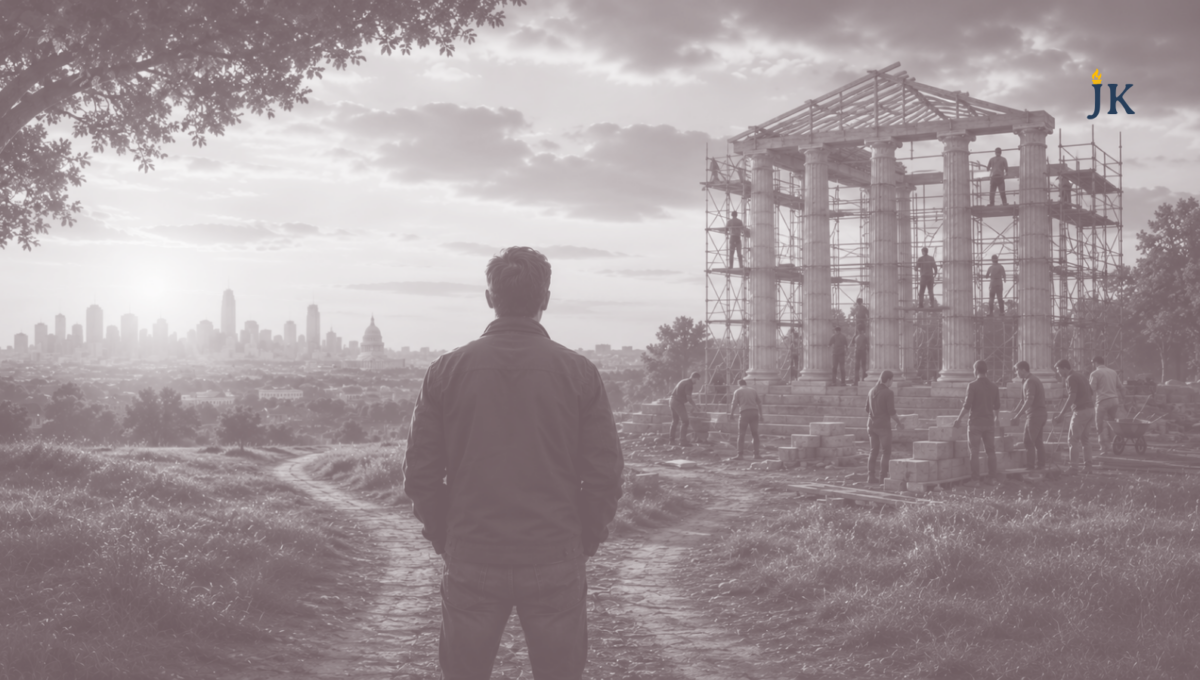
There is a tendency in modern politics to believe that one election, one candidate, or one charismatic leader can change everything. History suggests otherwise.
Nations are rarely transformed by individuals alone. They are shaped by institutions.
Long after great leaders have left the stage, the institutions they built, or failed to build, continue influencing generations that follow.
That lesson is just as true for the conservative movement.
Every Movement Needs More Than Leaders
Leadership matters. Ideas matter. Winning elections matters.
But none of those things are enough on their own.
Without institutions, ideas disappear. Without institutions, each generation is forced to rediscover truths that should have been passed down. Without institutions, movements become dependent on personalities instead of principles.
A personality can inspire people. An institution can educate them.
A personality can win an election. An institution can shape a culture.
Those are very different things.
Conservatism Has Always Been Institutional
When we think about the ideas that shaped America, we often think about remarkable individuals.
Madison. Hamilton. Jefferson. Washington.
But those men did more than write essays or win elections. They built institutions.
The Constitution. Congress. An independent judiciary. Federalism. Checks and balances.
They understood something that remains true today: Ideas endure only when they become embedded in institutions.
The same principle applies outside government.
Families. Churches. Schools. Universities. Businesses. Charities. Civic organizations.
A free society depends on strong institutions that cultivate virtue, transmit knowledge, and prepare citizens for self-government.
Modern Conservatism Often Thinks Too Small
Too much of today’s political energy is focused on the next election. The next controversy. The next endorsement. The next viral moment.
Those things matter, but they rarely outlast the news cycle.
Ask yourself this question:
- If your favorite politician retired tomorrow, what would remain?
- If your favorite podcast disappeared next week, what would replace it?
- If your favorite social media personality stopped posting, would the movement become stronger or weaker?
Those questions reveal whether we have built institutions or simply accumulated personalities.
Institutions Compound
One of the remarkable characteristics of institutions is that they accumulate value over time.
A newspaper develops credibility. A think tank builds expertise. A civic organization develops relationships. A school educates generation after generation. A research organization creates institutional memory.
Every article. Every database. Every relationship. Every student. Every volunteer.
Each becomes another brick in something larger than any individual.
That is how enduring movements are built. Not overnight, but steadily. Patiently. Intentionally.
The Conservative Movement Needs Builders
There is no shortage of commentators. There is no shortage of candidates. There is no shortage of people willing to criticize what already exists.
There are far fewer people willing to build.
Building is slower. Building is harder. Building often receives little recognition, but builders create the foundation upon which future generations stand.
Some people build schools. Some build businesses. Some build churches. Some build research institutions. Some build civic organizations. Some mentor young leaders. Some preserve history. Some create media that educates rather than merely entertains.
All of those are acts of institution-building, and all of them matter.
We Should Think in Generations
One of conservatism’s greatest strengths has always been its appreciation for continuity. We inherit a civilization we did not create.
We have a responsibility to preserve what is good, reform what is broken, and pass something better to those who follow.
That requires thinking beyond the next election. It requires asking questions that politicians rarely have time to ask.
- What institutions will educate tomorrow’s leaders?
- Who is preserving institutional memory?
- Who is teaching constitutional government?
- Who is cultivating future statesmen instead of simply producing activists?
Those are the questions that determine whether a movement matures or merely survives.
Building Something Worth Inheriting
Every generation inherits institutions built by those who came before.
Some inherit flourishing schools. Others inherit broken ones.
Some inherit vibrant civic organizations. Others inherit empty shells.
The same is true of political movements.
If we spend all our energy chasing personalities and today’s controversies, we may win a few elections, but we will leave very little behind.
If instead we dedicate ourselves to building institutions rooted in enduring principles, we create something far more valuable.
Not merely victories, but permanence.
A Better Question
Perhaps the question conservatives should ask is not:
“Who will lead us next?”
Perhaps it is:
“What are we building that will still matter after we’re gone?”
Because elections come and go. Personalities rise and fall. Movements evolve.
But institutions, when faithfully grounded in enduring principles, become the vessels through which liberty is preserved for the next generation.

Jeramy Kitchen
Holding the line in Austin. Analysis of public policy making its way through the process, campaign finance, and the occasional field note from a concerned taxpayer.