Hubris
Republican hubris brought a deserved reckoning. A case for limited government, economic freedom, accountability, and a more optimistic political vision.
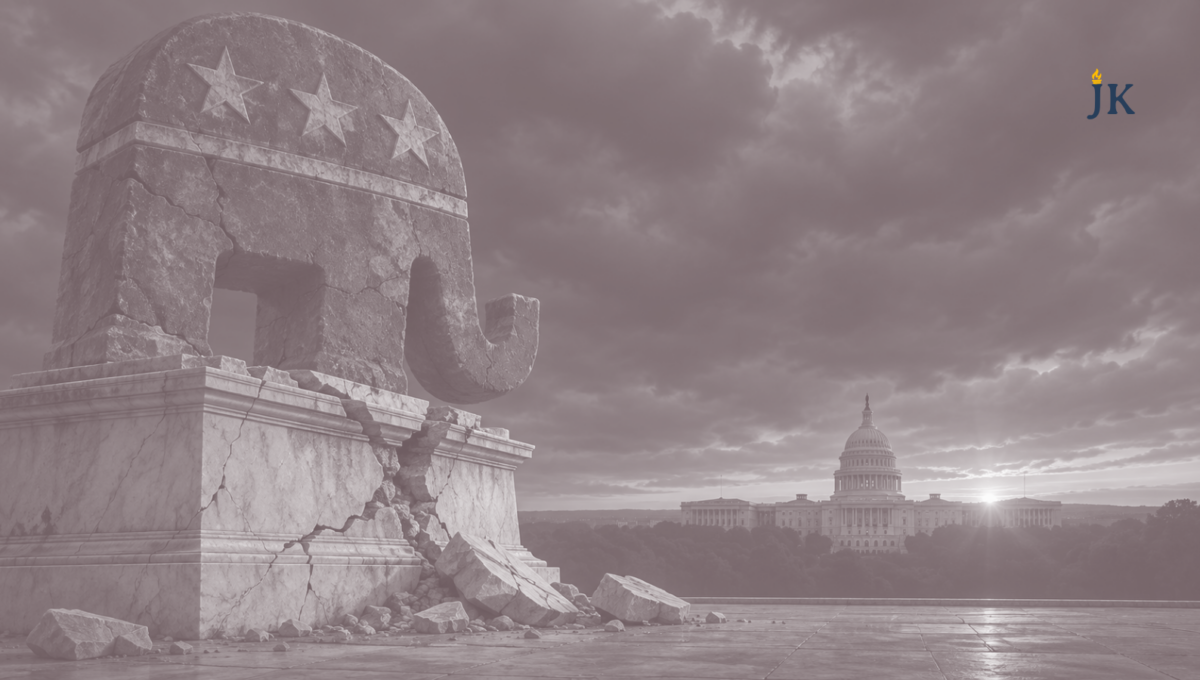
Republicans took a well-deserved shellacking yesterday. I take no pleasure in saying that; I am certainly not celebrating what has risen in its wake, and no doubt tribalists and those unable to truly think for themselves will take issue with that statement. From a limited government perspective, I fear the consequences could be even worse for liberty.
Still, believing the consequences may be worse does not require pretending the reckoning was undeserved.
There is a price for hubris. There SHOULD be a price for broken promises, SELECTIVE principles, and treating voters as though their only responsibility is to remain frightened enough of the other party to keep yours in power. Eventually, “the other side is worse” becomes an exhausting substitute for giving people a reason to support you.
Over the coming days, consultants, elected officials, and the permanently online will explain what happened with extraordinary confidence. Some will blame messaging. Others will blame candidates, turnout, insufficient loyalty, or insufficient ideological purity. Conveniently, many will discover that the results vindicate whatever they already believed.
I would be skeptical of any explanation that requires its author to reconsider nothing.
Affordability Is Where Accountability Begins
My starting point is simpler: It’s the economy, stupid.
It always deserves more attention than the political class seems willing to give it, particularly when the people in power would prefer to discuss something else.
People experience the economy through the bills they pay and the choices they can no longer afford. Groceries, housing, insurance, electricity, and the balance remaining after payday all shape whether getting ahead still feels possible. Parents wonder whether their children will have a reasonable opportunity to build a better life.
You cannot argue people into feeling prosperous. You cannot point to a favorable statistic and expect it to cancel out their household budget. When people tell you they are struggling, responding as though they have merely misunderstood your accomplishments is a particularly efficient way to lose their trust.
Politicians cannot credibly promise affordability while treating their own contributions to higher costs as beyond examination.
Tariffs make imported goods more expensive. Believing a tax on imports can somehow be imposed without imposing costs on the people buying and using those goods requires real cognitive dissonance, particularly from people who otherwise understand that taxes influence prices and behavior. Giving the tax a patriotic justification does not make its economic consequences disappear.
Government spending has to be financed, whether by taxpayers today or through obligations passed to future generations. Borrowing postpones the bill while adding interest. It does not spare anyone the cost.
Regulations can restrict competition and make it harder to build housing, produce energy, or start a business. Subsidizing a politically favored company still leaves someone else paying the bill.
Those policies deserve scrutiny even when they come wrapped in the language of national strength, economic development, or helping working families. The stated intention does not eliminate the cost.
The economy may be the starting point, but it is not the entire explanation. Competence matters. Character matters. Credibility matters. So does whether the people asking for another term appear to understand the lives of the people whose votes they need.
No single issue explains every race. That complexity should encourage honest reflection, rather than provide an excuse to avoid it.
Whatever Happened to “Taxed Enough Already”?
For those of us who favor limited government, the credibility problem deserves particular attention. The TEA Party (Taxed Enough Already Party) offers a lesson worth confronting.
There were, and still are, sincere people in that movement who care deeply about spending, debt, constitutional limits, and the growth of government. Many have continued doing difficult, unglamorous work to hold officials accountable. My criticism is directed at how readily substantial portions of the movement, including much of the leadership, allowed those founding concerns to become secondary to party loyalty.
“Taxed Enough Already” was a clear statement. So was the objection to a government that spent too much, borrowed too much, and reached too far into people’s lives. Those concerns demanded sustained scrutiny of anyone exercising power.
Yet how quickly did that scrutiny soften once the people responsible had an “R” beside their names? How readily did opposition to executive overreach become enthusiasm for a president willing to bypass obstacles? How often did demands for spending restraint become explanations for why this particular spending increase was necessary?
Too much of the movement folded when consistency became politically inconvenient.
Worse, some of that energy migrated toward demands that government involves itself in matters it had no business controlling in the first place. People who once warned about Washington directing their lives became comfortable asking politicians to direct someone else’s choices, punish disfavored businesses, or intervene whenever a cultural dispute became sufficiently aggravating.
Private criticism, voluntary association, consumer choice, and parental responsibility all leave room for people to act on their convictions. A demand for government intervention requires a separate justification. Being offended or frustrated does not automatically supply one.
A movement concerned about the growth of government should be particularly careful about finding new jobs for it.
We cannot spend years insisting that spending, debt, executive overreach, and government interference threaten our future, then develop an elaborate collection of exceptions whenever Republicans are responsible. Every exception teaches voters something about how seriously we meant the principle in the first place.
If fiscal restraint disappears when it becomes politically inconvenient, why should anyone believe the next promise? If an abuse of power becomes acceptable once our preferred politician exercises it, what exactly are we asking voters to defend?
Thomas Jefferson warned, “The natural progress of things is for liberty to yield and government to gain ground.” That warning does not expire when Republicans take office. It should make us especially attentive to what the people claiming to defend liberty actually do with power.
James Madison’s observation in Federalist No. 51 remains relevant: “If men were angels, no government would be necessary.” The people we elect share the human weaknesses that make restraints on power necessary in the first place. Our confidence in a particular officeholder cannot substitute for those restraints.
Limited government has to mean something while our friends hold office.
That means scrutinizing spending increases even when they fund popular programs. It means opposing corporate welfare even when the recipient promises jobs in our district. It means defending private property, free expression, and due process even when doing so frustrates an official we otherwise support.
These are the moments when principles become consequential. Consistency requires accepting that our preferred limits on government will sometimes prevent our preferred politicians from doing something we might like.
“Owning the Libs” Is a Terrible Way to Govern
“Owning the libs” became a social media phenomenon. It is a terrible way to govern.
An opponent’s outrage tells us very little about whether a policy is constitutional, affordable, effective, or consistent with liberty. A viral clip cannot tell us whether a family is better able to pay its bills. Humiliating someone online does not establish that the person doing it possesses sound judgment.
Yet the incentives of social media encourage exactly that confusion. Provocation attracts attention. Conflict rewards repetition. Admitting uncertainty or acknowledging a legitimate criticism can be treated as weakness, while confidently saying something ridiculous can produce an audience.
Governing by social media influencers is a terrible idea because those incentives bear so little resemblance to the responsibilities of public office.
Influencers have every right to participate in political debate. Some contribute valuable research and scrutiny. Their audience size, however, does not confer expertise, and their ability to generate engagement does not make them qualified to set a governing agenda.
Elected officials have to consider legal authority, costs, tradeoffs, implementation, and consequences that may persist long after everyone has moved on to the next controversy. They owe that consideration to people who will never appear in their replies or attend their rallies.
When officials begin treating the approval of a handful of online personalities as their primary measure of success, the public gets government shaped around the next post. Problems that require patience receive less attention than disputes that promise immediate applause.
There is room for humor, sharp criticism, and political combat. There also has to be a point at which the people entrusted with power demonstrate that they can do more than perform for an audience.
A Defeat for Republicans Is Not a Verdict Against Liberty
One lesson I hope survives the coming avalanche of election analysis is that Republican defeat does not amount to a verdict against limited government.
We have to examine the record they actually governed on. Where Republicans expanded spending, rewarded politically connected businesses, imposed new restrictions, or excused executive overreach, they owe voters an accounting for those decisions. Calling that record conservative does not resolve its contradictions.
That also does not mean every Republican loss can be explained by insufficient fidelity to limited government. Elections involve candidates, personalities, circumstances, and voters with competing priorities. It does mean we should be careful about declaring a governing philosophy defeated when the officials associated with it frequently departed from its requirements.
I worry that some will conclude the answer is to offer their own version of every government intervention Democrats propose. If voters are struggling, promise another subsidy. If an industry faces competition, offer it protection. If people are angry, find another private decision for government to control.
That approach leaves the underlying argument for an expanding state largely intact. It reduces the disagreement to which politicians should direct it and whose priorities should receive the benefits.
Changing the people exercising power offers little reassurance if the power itself continues expanding.
Voters should be able to expect that choosing leaders who promise limited government will result in a government that costs less, intrudes less, and leaves them with greater control over their lives. Republicans have to earn that expectation through their conduct in office.
We Need an Optimistic Vision Worth Supporting
Accountability alone is insufficient. We also have to offer an optimistic vision of what comes next for our country, for Texas, and for the communities where we are raising our children and building our lives.
That optimism is sorely missing from today’s political zeitgeist.
So much of our political conversation consists of telling people whom to resent, what to fear, and why the next election represents their last opportunity to avert catastrophe. There are real threats worth confronting. There are also people trying to build a life who deserve to hear something more hopeful than an endlessly updated catalog of enemies.
What does a freer country make possible? A young family buying its first home. A tradesman opening his own business. Parents finding an education that fits their child. Neighbors solving problems together. Communities growing more prosperous while preserving the things that make them worth calling home.
Those are aspirations worth organizing a political movement around. We should be able to explain how the principles we advocate help bring them within reach.
Ronald Reagan expressed that confidence when he said, “We know that our nation’s best days are still ahead of us.” Whatever disagreements one may have with his record, that belief in the country’s future is something our politics desperately needs to recover.
Optimism requires more than a sunny campaign advertisement. It requires confidence in people: their ability to create, cooperate, take responsibility, and build something better when government gives them room to do so. It requires leaders who can describe a future people want to participate in, then pursue policies consistent with that promise.
We should explain what economic freedom means in practice: more homes people can afford, more opportunities to earn a living, more room for businesses to compete, and more of a family’s paycheck left in its own hands. Those outcomes give an optimistic vision substance. They connect the principles we defend to the future people hope to build.
If we believe liberty offers the best opportunity for human flourishing, there ought to be some joy and confidence in the way we defend it. People should hear us and come away with a clearer sense of what they and their children could achieve.
Anger can mobilize people for an election. Building lasting support requires giving them something worth moving toward.
What Republicans Should Learn, and What They Probably Will
Republicans should learn that public office is borrowed authority. Voters are owed results and honesty. Their concerns deserve a serious response, even when those concerns complicate the party’s preferred narrative.
Here in Texas, that requires taking seriously the property tax burden, government spending, and the barriers that make earning a living or starting a business unnecessarily difficult. It requires asking whether tax relief is sustainable without spending restraint, whether education freedom reaches every family, and whether economic development policy respects taxpayers and competition.
It also requires enough humility to recognize that government cannot manufacture prosperity through political favoritism, and that a campaign promise becomes a liability when voters repeatedly watch it go unfulfilled.
What will Republicans likely learn? I worry that many will conclude they need better slogans, more combative personalities, different consultants, or a more effective way to explain why none of this was their fault. Some will insist the answer is to wield government power more aggressively, despite having spent years warning about the dangers of that very power. Others will blame voters for failing to appreciate their accomplishments. Neither response offers much reason to expect improvement.
Meanwhile, Democrats will have every incentive to interpret Republican rejection as public approval of their own agenda. That conclusion deserves scrutiny, too. A vote to remove someone does not settle every argument about what should replace them.
Winning office creates an opportunity to govern. It does not establish that higher taxes, additional spending, expanded regulation, or greater political control will improve people’s lives. That is what makes this moment so frustrating. Accountability can be deserved without the resulting policy direction being desirable. An election can punish bad stewardship without producing better stewardship.
The Work Continues
For limited government advocates, the obligation remains the same: apply the principles CONSISTENTLY, especially when doing so is uncomfortable. Oppose government overreach REGARDLESS of who proposes it. Make the case for liberty in terms people can connect to their own lives. Hold the people who claim to represent those principles accountable for actually practicing them.
We should be willing to examine our own arguments, too. If people do not understand how the policies we advocate would improve their lives, we have work to do. If our rhetoric communicates contempt more readily than confidence, we should reconsider how we speak. If our alliances require us to excuse the very conduct we once opposed, we should reconsider what those alliances are accomplishing.
Above all, keep offering a HOPEFUL vision for the future. Our children deserve to inherit a country where opportunity remains real, liberty remains secure, and their ambitions have room to grow. That is a future worth working toward regardless of which party won yesterday.
I would rather Republicans had earned the public’s confidence. I would rather the alternative offered a stronger prospect for liberty. Neither wish obligates me to excuse the conduct that helped bring us here.
The reckoning may have been deserved. What comes after it still has to be contested, with consistent principles, honest self-examination, and a vision of the future worth earning people’s support.

Jeramy Kitchen
Holding the line in Austin. Analysis of public policy making its way through the process, campaign finance, and the occasional field note from a concerned taxpayer.